Fish Oil Concentrate
- Category
- Active ingredient
- Label information
- 2,200 mg
- Details
- Re-esterified triglyceride fish oil concentrate
EPA + DHA Omega-3 | 1,100 mg
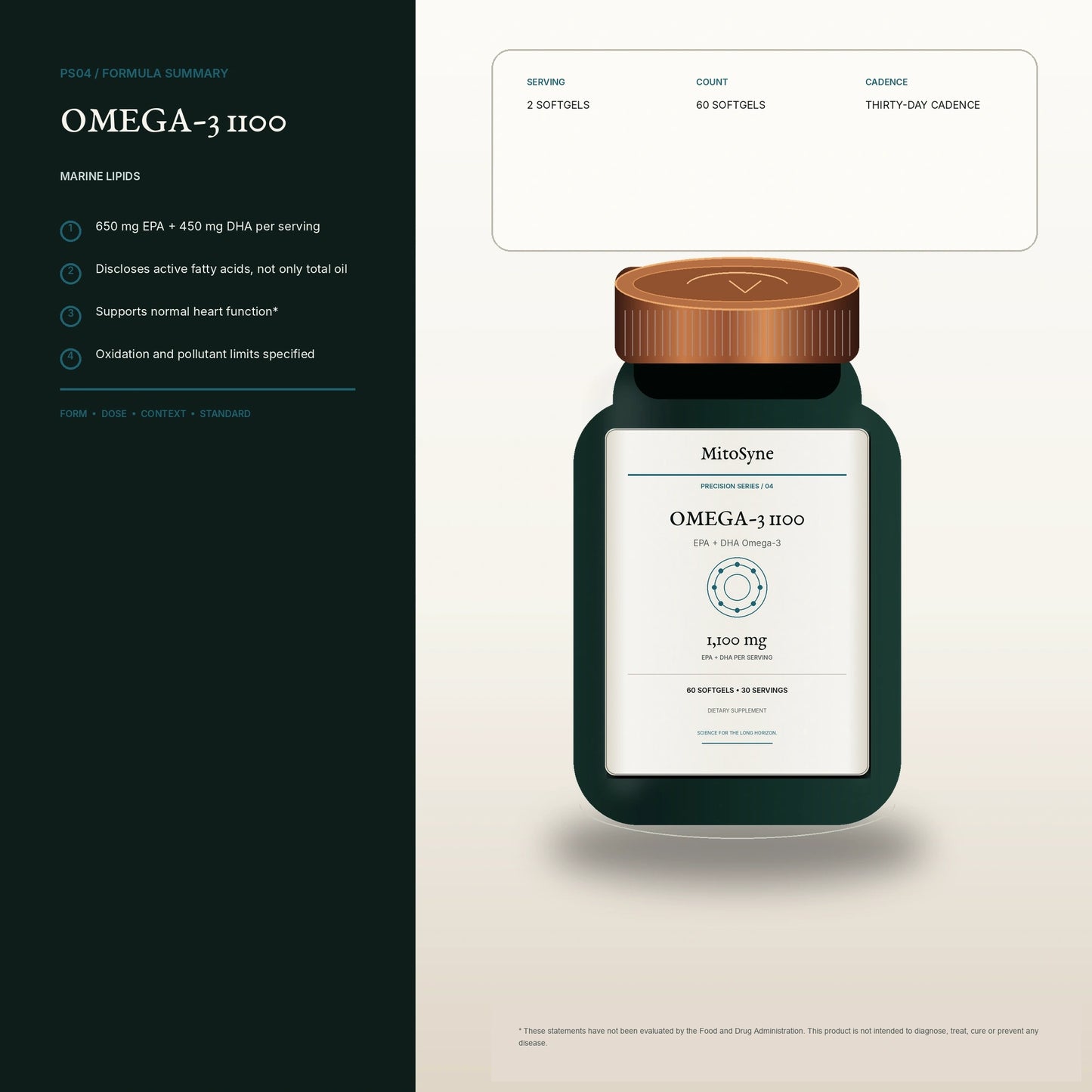
Provides 650 mg EPA and 450 mg DHA per serving to support heart, brain and joint health.
Couldn't load pickup availability
Formula overview
A concentrated EPA + DHA softgel product built around disclosed fatty-acid amounts, oxidation limits and contaminant control rather than a vague milligram figure for total fish oil.
Active form
Re-esterified triglyceride fish oil delivering EPA 650 mg + DHA 450 mg
The label leads with the combined EPA and DHA amount, while every lot is checked for oxidation and contaminants.
Intended role
Provides 650 mg EPA and 450 mg DHA per serving to support heart, brain and joint health.
Evidence is extensive but not uniform. Some meta-analyses report modest cardiovascular effects, while Cochrane reviews find little or no effect on mortality in broad prevention. Supplemental omega-3 can increase atrial-fibrillation risk in a dose-dependent manner in some high-risk populations.
Interactions
Professional review is important with anticoagulants, antiplatelet medicines, bleeding disorders, atrial fibrillation, planned surgery or prescription omega-3 use.
The oil volume required to deliver 1,100 mg of EPA + DHA cannot fit reliably into one standard softgel.
TOTOX combines primary and secondary oxidation measures. It is one indicator of oil freshness, not a complete quality assessment.
High-quality oil, stable packaging and taking it with food reduce risk, but no product can guarantee zero aftertaste for every person.
Evidence is mixed and population-specific. This supplement is not intended to prevent or treat cardiovascular disease.
Professional review is appropriate because of bleeding and medicine considerations.
Continue exploring
 MitoSyne D3 + K2 — Vitamin D3 + Vitamin K2 MK-7, 50 + 90 mcg$52.80 USD
 MitoSyne Astaxanthin 6 — Natural Astaxanthin, 6 mg$55.20 USD
 MitoSyne Ubiquinol 100 — Ubiquinol, 100 mg$56.40 USD