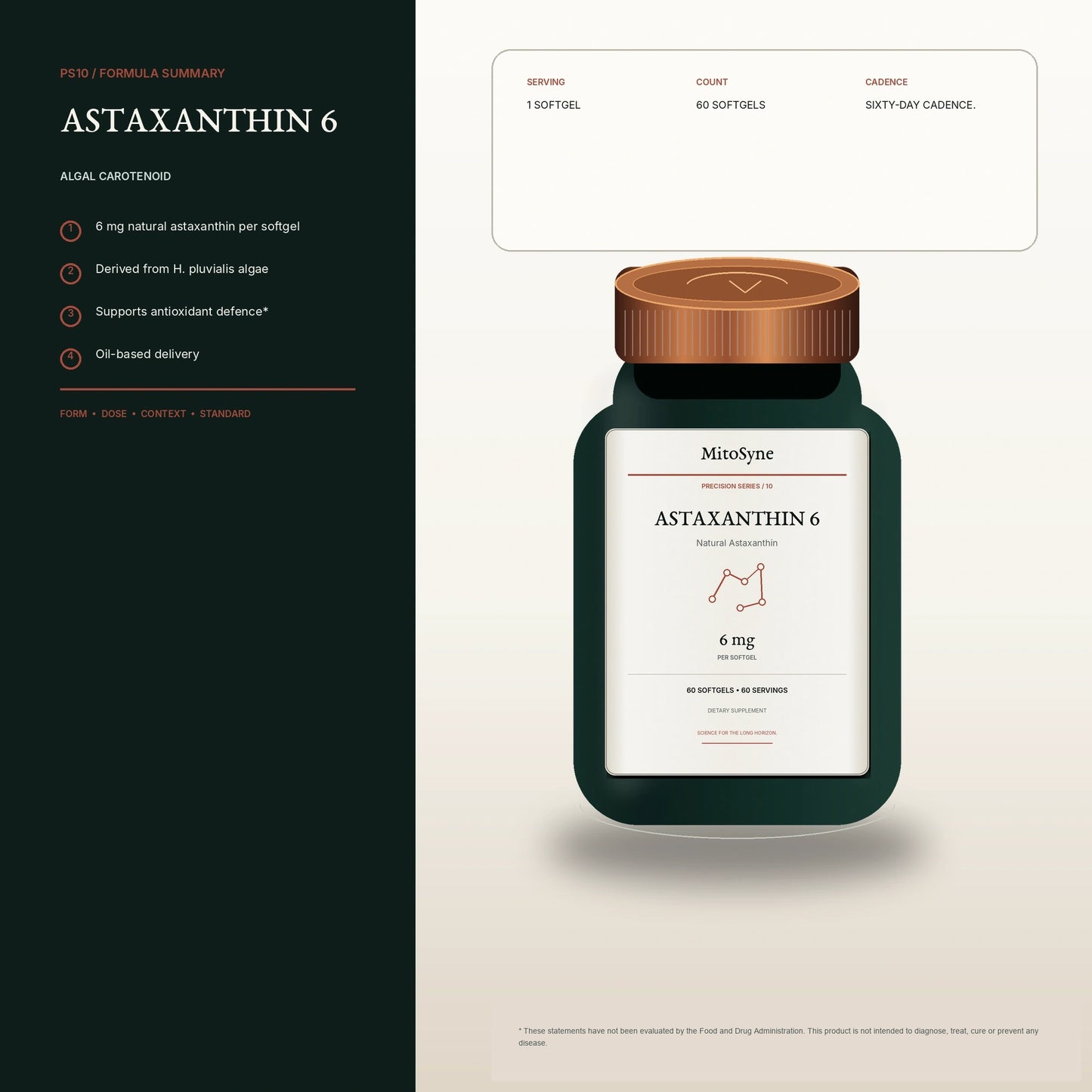
Natural Astaxanthin
- Category
- Active ingredient
- Label information
- 6 mg
- Details
- AstaReal® natural esterified astaxanthin from Haematococcus pluvialis
Natural Astaxanthin | 6 mg
Supports antioxidant defence and skin and eye health with 6 mg natural astaxanthin.
Couldn't load pickup availability
Formula overview
Six milligrams of natural algae-derived astaxanthin in an oil softgel, with source identity, ester profile and light protection treated as part of the product—not afterthoughts.
Active form
AstaReal® natural esterified astaxanthin from Haematococcus pluvialis
The oil-based formula uses high-oleic sunflower oil and is protected from light and oxygen in a dark-red softgel.
Intended role
Supports antioxidant defence and skin and eye health with 6 mg natural astaxanthin.
Human trials span skin, eye fatigue, exercise and oxidative-stress biomarkers, but sample sizes and findings are heterogeneous. Six milligrams sits within commonly studied supplemental ranges and below the EFSA adult safety context of 8 mg/day from supplements.
Interactions
Use caution with blood-pressure, glucose-lowering or immune-modulating medicines because clinical interaction data are limited.
This formula uses AstaReal® natural astaxanthin from Haematococcus pluvialis microalgae, confirmed by source and carotenoid-profile testing.
Astaxanthin is lipid soluble, so a meal containing fat supports absorption.
Some studies examine skin outcomes, but results vary and no visible change can be guaranteed.
Six milligrams fits within common human-study ranges while keeping the product below higher-dose safety thresholds used in some regulatory assessments.
Carotenoid pigments can change stool colour in some users. This is generally not harmful, although any persistent concern should be discussed with a healthcare professional.
Continue exploring
 MitoSyne Omega-3 1100 — EPA + DHA Omega-3, 1,100 mg$54.60 USD
 MitoSyne D3 + K2 — Vitamin D3 + Vitamin K2 MK-7, 50 + 90 mcg$52.80 USD