MitoSyne LumaField 660/850 Red + Near-Infrared Light Panel
MitoSyne LumaField 660/850 Red + Near-Infrared Light Panel
Couldn't load pickup availability
A measured full-body light platform built for repeatable home photobiomodulation routines.
Selectable red and near-infrared channels, mapped output and restrained industrial design bring clarity to a technically noisy category.
A closer look
LumaField provides independent 660 nm red and 850 nm near-infrared channels, allowing either wavelength range or both to be used within a defined session. A timer and distance guide make the routine repeatable, while spectral reporting and irradiance maps show output across the panel rather than highlighting one peak value. Low-flicker electronics, quiet active cooling and a stable floor stand support consistent home use. Research on photobiomodulation spans several narrow clinical and wellness settings, with outcomes shaped by wavelength, dose, distance, schedule and population. LumaField therefore presents its optical specifications directly and avoids converting category-wide evidence into promises of healing, fat loss, anti-aging or systemic disease treatment.
The details that matter
- Independent 660 nm red and 850 nm near-infrared channels
- Third-party spectral report and irradiance map at multiple distances
- Low-flicker driver, quiet cooling and session timer
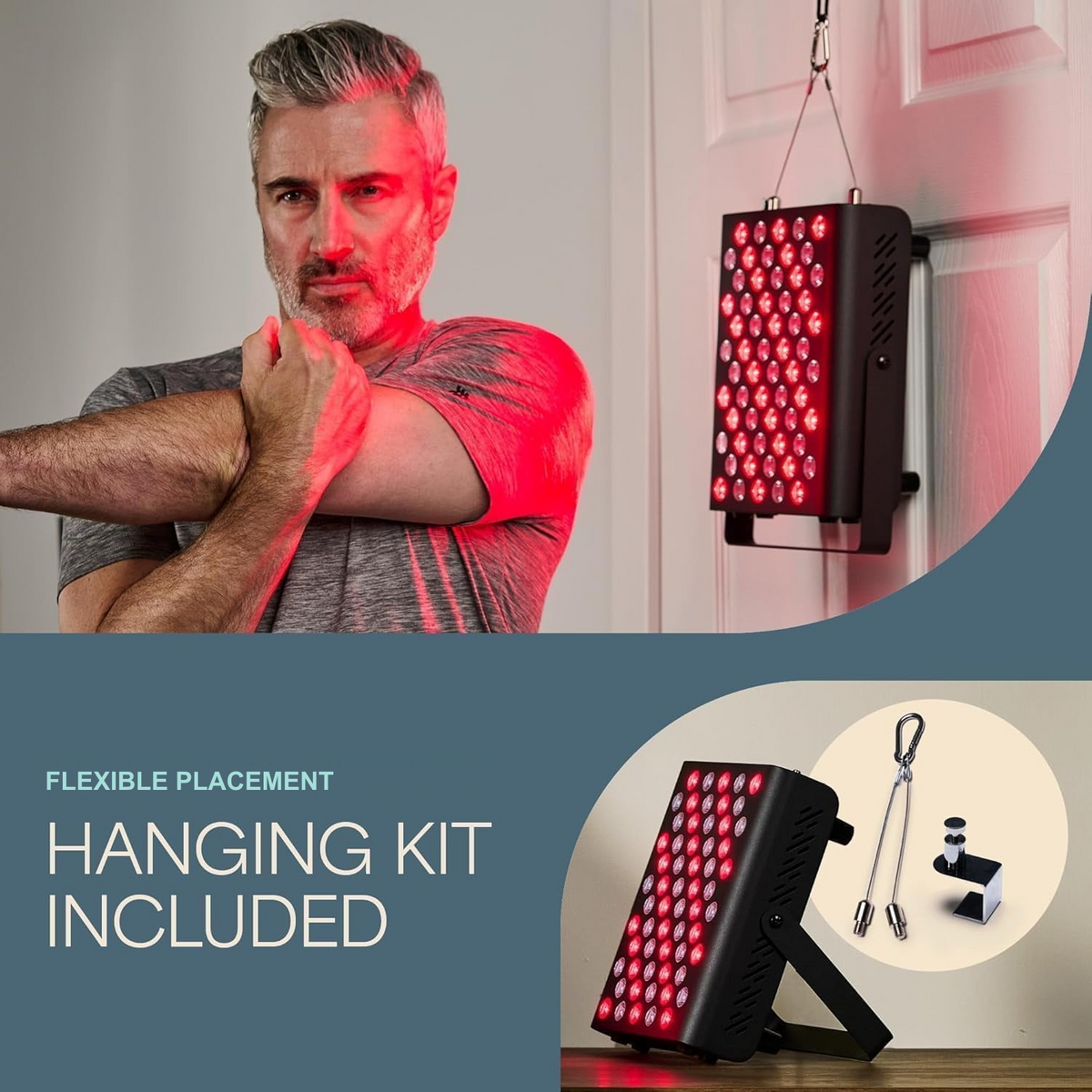
- Stable floor stand plus wall/hanging hardware
- No ultraviolet output and no ozone-generating function
Why it belongs
LumaField makes wavelength, output, distance and session assumptions visible, giving a complex light category a more disciplined frame.
What the evidence supports
Photobiomodulation has plausible mechanisms and clinical evidence in several narrow indications, but protocols and outcomes are heterogeneous. The product must not convert category-wide evidence into blanket whole-body claims.
What it is designed to do
Supports a structured red and near-infrared light routine with selectable wavelengths, measured output and defined working distances.
Use and care
Avoid staring into LEDs. Use extra caution with photosensitizing medicines, light-sensitive conditions, pregnancy, active cancer treatment or impaired heat sensation; seek clinician advice where relevant.