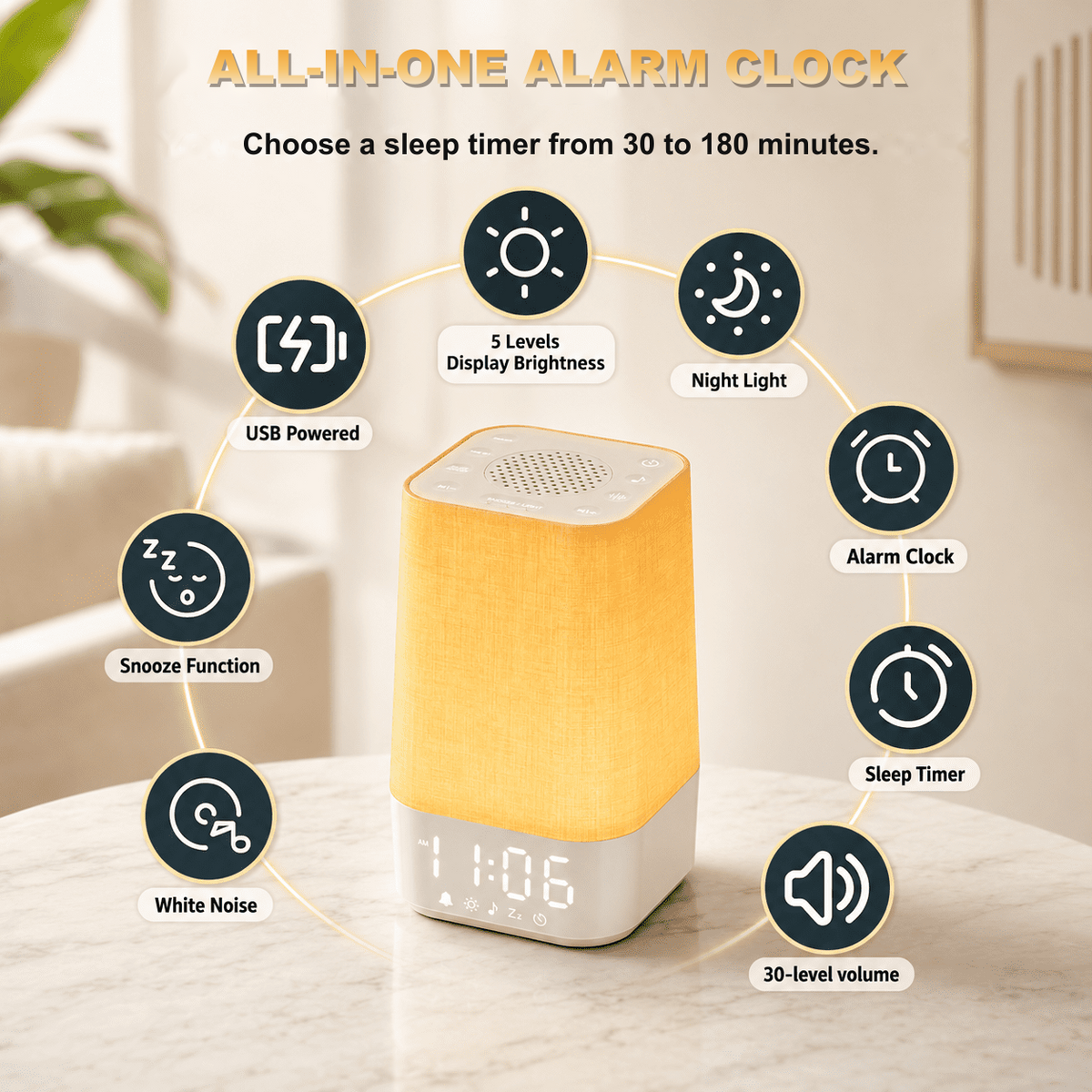
MitoSyne DawnLine Sunrise Alarm
MitoSyne DawnLine Sunrise Alarm
Couldn't load pickup availability
A gradual, low-glare wake light designed to replace an abrupt transition from darkness to alarm.
DawnLine builds light over 20 to 60 minutes, keeps the clock dark at night and leaves the phone outside the morning routine.
A closer look
DawnLine eases the transition into morning with a gradual rise from warm to brighter light. Four dawn windows allow the routine to fit different schedules, while an optional quiet sound remains separate from the light sequence. The clock display can disappear completely overnight, tactile controls stay usable in the dark and battery-backed memory protects the alarm settings. Dawn simulation has evidence in seasonal mood contexts and may make waking feel easier for some people, but it is not equivalent to a full 10,000-lux light box. Measured output at pillow distance, smooth low-end dimming and a restrained night interface keep DawnLine focused on a consistent wake routine rather than an exaggerated therapeutic claim.
The details that matter
- 20/30/45/60-minute gradual dawn program
- Warm-to-neutral light transition with smooth low-end dimming
- Fully dark clock-display mode and tactile controls
- Optional gentle sounds with separate volume control
- Battery-backed alarm memory and USB-C power
Why it belongs
DawnLine makes circadian consistency more practical through a quiet, comprehensible routine that does not require another screen beside the bed.
What the evidence supports
Controlled dawn-simulation studies support benefit in seasonal affective contexts; broader consumer sleep and wake benefits are plausible but less firmly established.
What it is designed to do
Provides adjustable dawn-like light before the alarm, with optional sound and a fully dark overnight display.
Use and care
People sensitive to light or with bipolar disorder, retinal disease or photosensitizing medication should use caution and obtain professional guidance where appropriate.